U.S. Army Chemical Materials ActivityU.S. Army Chemical Materials ActivityU.S. Army Chemical Materials ActivityU.S. Army Chemical Materials Activity
  • Home
  • About
  • History
  • What We Do
    • Comply
    • Destroy
    • Store
  • Resources
  • Contact

What is CMA?

Headquartered at Aberdeen Proving Ground-South, Maryland, the U.S. Army Chemical Materials Activity assesses and destroys recovered chemical warfare materiel in the United States. The CMA Recovered Chemical Materiel Directorate provides centralized management and direction to the Department of Defense for the assessment and destruction of recovered chemical warfare materiel in a safe and environmentally compliant manner.

The CMA director serves as the treaty implementing agent, delegated by the Department of Defense, to ensure the Army adheres to international treaty requirements in compliance with the Chemical Weapons Convention treaty. The CMA Center for Treaty Implementation and Compliance manages implementation and compliance activities.

The activity stored and destroyed the nation’s chemical stockpile at seven locations, and stored the stockpiles at the final two locations, Pueblo Chemical Depot, Colorado, and Blue Grass Army Depot, Kentucky. The Pueblo Chemical Agent-Destruction Pilot Plant completed destruction operations on June 22, 2023, and the Blue Grass Chemical-Agent Destruction Pilot Plant completed destruction operations on July 7, 2023. To learn more about the chemical weapons destruction missions in Colorado and Kentucky, visit www.peoacwa.army.mil. See below to learn more about the entire U.S. chemical stockpile destruction mission.

The Chemical Stockpile Emergency Preparedness Program worked closely with state and local governments and the Federal Emergency Management Agency to educate, prepare and protect communities surrounding the stockpile sites. CSEPP will continue to support both communities until the site closure process is complete and all recoverable chemical agent has been destroyed.

United States Chemical Stockpile Sites

CHEMICAL MATERIALS ACTIVITY

TREATY

Headquartered at Aberdeen Proving Ground, Maryland, the U.S. Army Chemical Materials Activity (CMA) director serves as the treaty implementing agent, delegated by the Department of Defense (DOD) to support United States compliance with the international Chemical Weapons Convention treaty. The CMA Center for Treaty Implementation and Compliance manages our Nation’s treaty implementation and compliance activities, including declared recovered chemical warfare materiel and single small-scale facilities.

ASSESS AND DESTROY

As the program executioner for the DOD Recovered Chemical Warfare Materiel Program, CMA supports Army readiness by assessing and destroying chemical warfare materiel using transportable technologies wherever it is recovered in the United States. CMA’s Recovered Chemical Materiel Directorate provides centralized management and direction to DOD for the assessment and destruction of recovered chemical warfare materiel in a safe and environmentally compliant manner.

STORAGE

CMA provides DOD the expertise for safe and secure storage of chemical warfare materiel pending its destruction. The Army draws on CMA’s extensive knowledge and experience in managing chemical agent and munition assessment and destruction, storage facility design, safe handling and accountability processes to posture other nations’ stockpiles for destruction in compliance with the Chemical Weapons Convention treaty, if required. CMA also stood up Redstone Chemical Activity (CMA RCA) to support the Army’s investigative environmental remediation and storage activities at Redstone Arsenal in Huntsville, Alabama.

CMA History

In 1992, the Army combined elements from the former U.S. Army Soldier and Biological Chemical Command and Program Manager for Chemical Demilitarization to consolidate the Army’s chemical agent, munitions storage and demilitarization functions under a single organization. Formally called the U.S. Army Chemical Materials Agency, a major subordinate command of the U.S. Army Materiel Command (AMC), CMA was established to manage the nine chemical weapons stockpiles, assess and destroy recovered chemical warfare materiel, and manage CSEPP in the communities around the stockpile sites.

The nine stockpile sites were located at Umatilla Chemical Depot in Oregon, Deseret Chemical Depot in Utah, Pueblo Chemical Depot in Colorado, Pine Bluff Chemical Activity in Arkansas, Newport Chemical Depot in Indiana, Blue Grass Chemical Activity in Kentucky, Anniston Chemical Activity in Alabama, Edgewood Chemical Activity in Maryland, and Johnston Atoll.

In December 2006, the Agency successfully completed destroying the Nation’s former chemical warfare production facilities, and finished destroying the binary chemical weapons inventory in November 2007. By January 2012, all chemical weapons were destroyed at seven of the nine U.S. stockpile sites, eliminating nearly 90 percent of the original declared chemical stockpile.

In July 2012, the Agency was redesignated from a major subordinate command to an AMC Separate Reporting Activity and renamed the U.S. Army Chemical Materials Activity.

Today, CMA continues to support Soldier readiness by safely assessing and destroying chemical warfare materiel recovered in the United States, using transportable technologies specifically developed for this mission.

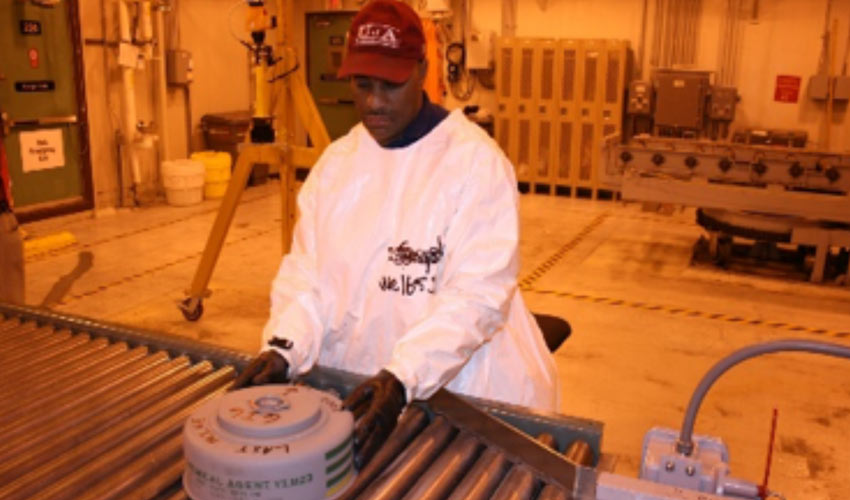
A munitions handler guides the last M23 VX land mine in the Anniston Army Depot stockpile as it moves on the conveyor to the destruction process.

A munitions handler guides the last M23 VX land mine in the Anniston Army Depot stockpile as it moves on the conveyor to the destruction process.

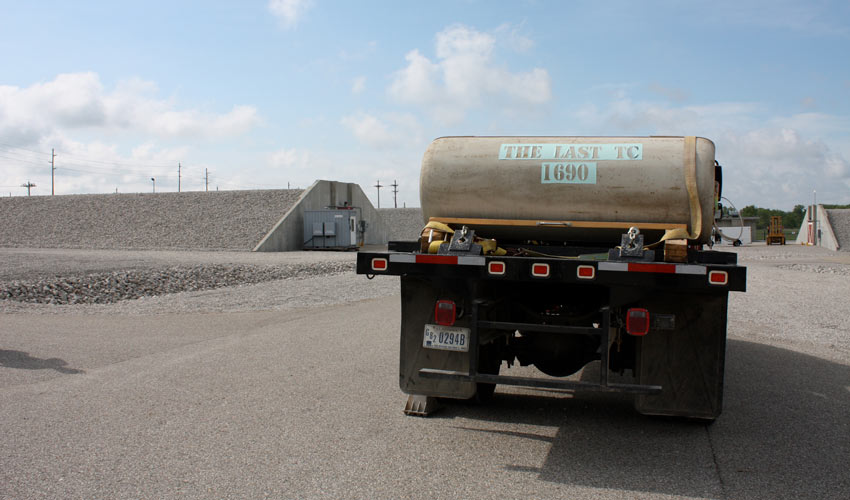
The last ton container from the Newport Chemical Depot stockpile is ready for delivery to the Newport Chemical Agent Disposal Facility.

The last ton container from the Newport Chemical Depot stockpile is ready for delivery to the Newport Chemical Agent Disposal Facility.

LEADERSHIP

Horne_CMA_Director

MR. KELSO C. HORNE III

Director
U.S. Army Chemical Materials Activity

Download Biography
Download Photo

COL RODNEY D. MCCUTCHEON

Commander
Redstone Chemical Activity

Download Biography
Download Photo

Rock_RCMD_Director

DR. CANDACE A. ROCK

Director
Recovered Chemical Materiel

Download Biography
Download Photo

CMA Quick Links

  • Homepage
  • About
  • History
  • What We Do
  • Resources
  • Contact

Army Links

  • Army FAQ
  • Spouse Employment Information
  • Accessibility/Section 508
  • Privacy & Security
  • No FEAR Act
  • FOIA
  • Home
  • About
  • History
  • What We Do
    • Comply
    • Destroy
    • Store
  • Resources
  • Contact
U.S. Army Chemical Materials Activity
Mountain

The mountain has been an element that has graced many of the past depot emblems, representing Pike’s Peak.

Missile

The Pershing Missile in the center represents one of the most prominent missions of the depot in the 1980s.

Hawk

The hawk represents native depot wildlife, the present and future mission of the environmental programs, and was also the name of one of the missile systems supplied by the depot during its missile mission in the 1950s and 60s.

Insignias

The branch insignia of both the U.S. Army Chemical Corps and Ordnance Corps represent the depot’s command structure through its history as both an ordnance and a chemical depot.

Colors & Text

The colors cobalt blue and yellow gold are representative of the U.S. Army Chemical Corps. “Pueblo Depot” is representative of the installation throughout its history. “1942” is the date of establishment. “Safety” and “Service” capture the continued and historical depot missions.

Motto

The motto translates to “A Common Good.”

Sun

The rising sun denotes the dawning of a new day without chemical weapons and the organization’s mission to safely destroy chemical weapons stockpile, thus changing the future of modern warfare.

Wheat

The three stalks of wheat symbolize the harvest of hope that has been secured through industry, cultivation and abundance. It also refers to the unit’s chemical/biological, smoke/obscurant and support to Homeland security industrial base missions at Pine Bluff Arsenal.

Eagle

The double-headed eagle suggests the two CMA methods for stockpile chemical weapons disposal, incineration and neutralization. These methods’ roots are traced back to Project Eagle I (incinerating of mustard agents) and Eagle II (neutralizing nerve agents).

Olive Branch

The olive branch signifies peace and the Activity’s commitment to abide by the stipulations of the Chemical Weapons Convention Treaty and assisting other nations.

Octagon

The octagon alludes to the eight original chemical weapons stockpile storage sites in the United States.