WASTE DISPOSAL
Destruction of chemical warfare materiel results in the creation of secondary waste. The Recovered Chemical Materiel
Directorate (RCMD) disposes of secondary waste at permitted commercial treatment, storage and disposal facilities.

After chemical warfare materiel is neutralized, liquid waste is
drained from the vessel of CMA RCMD’s Explosive Destruction
System to 55-gallon waste drums, which make up the EDS
waste transfer subsystem.
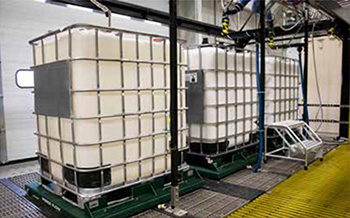
Newer EDS units use a different waste transfer
subsystem. Larger drums allow operations to continue
with fewer interruptions for waste disposal, resulting in
shorter operations.
Secondary Waste
This waste includes neutralents and remaining compounds that, although a byproduct of chemical weapons material destruction,
are free of compounds controlled by the Chemical Weapons Convention (CWC) treaty. The handling and disposal of this waste
remains consistent with methods used for disposal of hazardous and non-hazardous waste, which is regulated by federal and
state agencies to ensure safe handling.
RCMD disposes of chemical materiel in a safe, environmentally compliant and cost-effective manner, ensuring compliance with the CWC.
This may include chemicals and equipment used to produce some types of weapons, items recovered from military ranges and test kits
once used to train Soldiers about chemical weapons.